
Dharmendra’s passing should have been a moment of quiet finality: a family grieving, a country paying dignified homage to a beloved icon. But India now shaped by a hyperactive media ecosystem and a public conditioned by the content economy, no longer grants simplicity to its legends. What unfolded in his final days revealed, with startling clarity, how far the country has drifted from its own moral boundaries.
The violation began long before the hospital. Ten days before his actual death, Dharmendra was declared dead by major Indian news outlets, not on fringe social media pages, but by channels and websites that still present themselves as custodians of truth. This frenzy forced the Deol clan into an undignified scramble to correct the record, though their clarifications barely pierced the noise. The obituary had already been drafted, the push notifications fired, the clicks harvested. In a media culture that prizes speed over certainty, accuracy becomes almost ornamental. The fleeting spike of public outrage that followed was merely performative; the system had already been rewarded.
What happened next felt even more disquieting. In Dharmendra’s final hours, a hospital worker filmed him in the ICU where he was unconscious, surrounded by his devastated family, and released the video online. A moment that should have belonged solely to those in the room was instantly repurposed as shareable content. The motives were predictable: attention, money, virality. But the act pointed to a deeper fissure: the erosion of even the most basic ethical lines in an India where grief, illness, and death have become part of an endless stream of consumable visuals. The ICU, once a place of privacy and care, now functions as yet another stage.
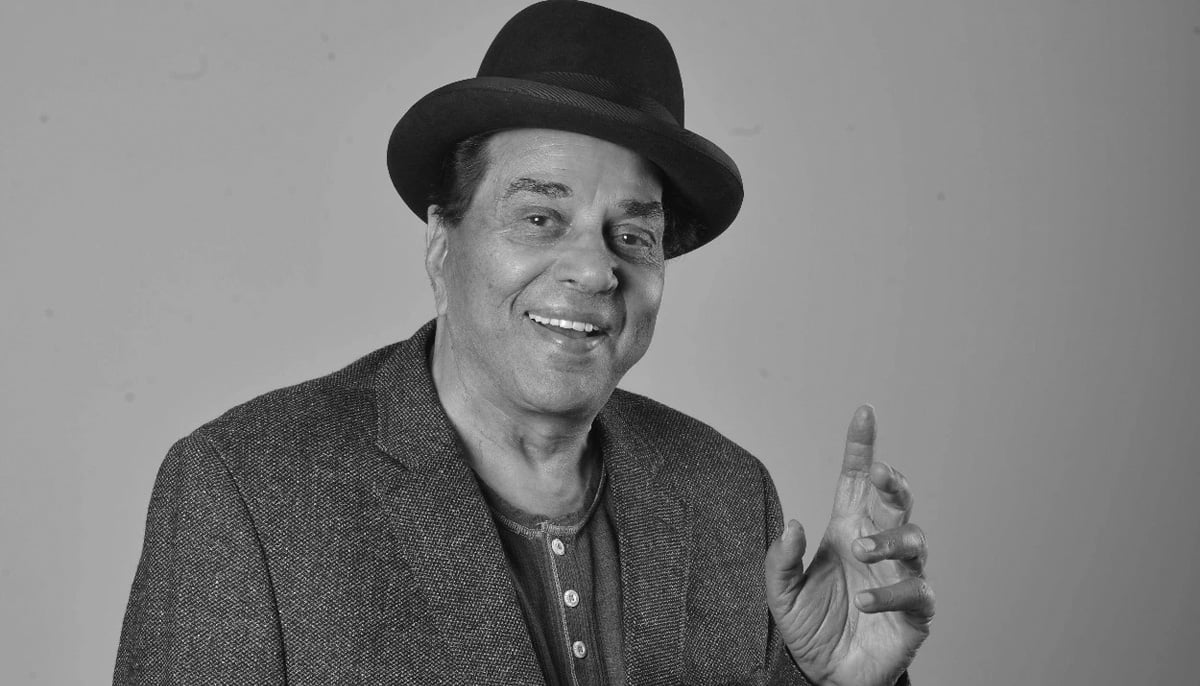 Against this backdrop, the Deol family’s decision to hold a small, private funeral felt almost radical. It was not secrecy for its own sake; it was a refusal to participate in the circus that had already encroached on Dharmendra’s final moments. In a country where celebrity funerals routinely become unruly public spectacles, a performance of collective mourning for cameras and crowds alike, the family’s restraint was its own quiet form of protest.
It underscored a painful truth: India has turned mourning into spectacle, grief into commentary, and funerals into opportunities for digital participation.
What makes this moment even more striking is how distinctively Indian it is. As an observer from outside, I cannot help but notice the contrast with Pakistan. Despite its own political turbulence, media unpredictability and problematic social fabric, Pakistan has not industrialized mourning in the same way. Celebrity deaths are covered, but not consumed. The machinery that feeds Indian media, the celebrity-PR-paparazzi loop, the relentless TRP race, the entitlement to private lives is far less entrenched. Public curiosity exists, of course, but it has not yet been fully weaponized. Privacy, even in death, still has some measure of protection. That contrast is telling.
India today operates within a near-perfect storm: a media industry built for spectacle, an audience habituated to constant consumption, and a celebrity culture that has become more public property than personal identity. Illness, divorce, breakdowns, final moments, none of these are treated as private experiences anymore. They are raw material in a marketplace where attention is the only currency that matters. And the public, conditioned by years of this cycle, becomes the essential participant. Dharmendra’s tragedy is not an aberration; it is part of a culture where ethics feel negotiable and dignity is often an afterthought.
The irony is almost unbearable. Dharmendra spent decades embodying warmth, grace, and humanity on screen. Yet in his final moments, he was denied the very dignity he brought to millions. A society that cannot protect its icons in their last hours will soon find itself unable to protect anyone at all.
The lesson here extends beyond Bollywood, beyond media, beyond a single death. It is a warning about what happens when a nation becomes desensitized to its own moral ruptures. When spectacle replaces empathy, when consumption replaces reflection, when outrage becomes routine, and when boundaries dissolve so completely that even the dying receive no sanctuary.
India’s media is not malfunctioning; it is performing exactly as its consumers have shaped it to perform. Until that changes, until the public begins to resist rather than reward this machinery, each tragedy will simply become another opportunity for monetization.
Dharmendra deserved a quieter exit. India deserved a moment of introspection. Instead, the country produced a spectacle. And the rest of us, watching from the outside, are left wondering how long a society can sustain itself once it begins to erode the very dignity that binds it together.